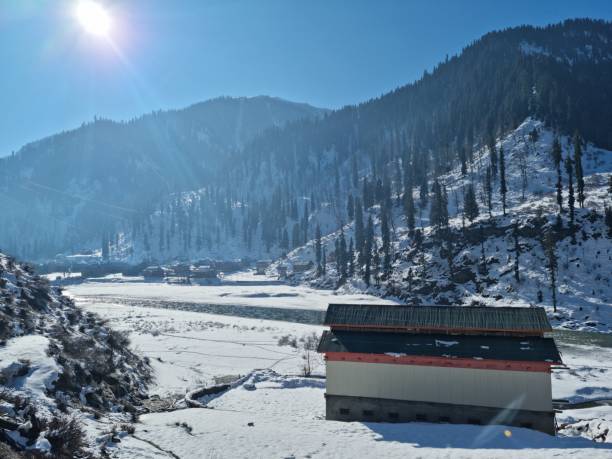
In several Pakistani villages, thick mud walls remain an important part of traditional housing. The practice reflects generations of knowledge about climate, materials, affordability, and comfortable living.
Rather than being viewed simply as an old-fashioned construction method, mud building can be remarkably practical. Local families have traditionally used materials available directly from their surroundings.
Villagers often understand how soil behaves during different seasons, how walls should be positioned, and where additional protection is needed. This knowledge is usually passed between generations.
Modern construction has introduced concrete, bricks, and steel across Pakistan, but mud homes continue in some rural communities. Their continued presence shows the practical value of traditional architecture.
One major reason for using thick mud walls is the availability of suitable soil. In many rural locations, earth can be collected locally without transporting heavy construction materials long distances.
Traditional builders commonly mix soil with water and other natural materials to create a workable building mixture. Depending on the region, straw or similar fibres may also strengthen the walls.
Using locally available materials can reduce dependence on commercially manufactured products. For families with limited construction budgets, this accessibility can make traditional housing considerably more affordable.
The surrounding landscape therefore plays an important role in determining building methods. Villages have historically adapted their homes to what the local environment could provide.
One of the most useful characteristics of thick earthen walls is their ability to moderate indoor temperatures. They can absorb heat gradually instead of allowing it inside immediately.
During very hot periods, this thermal mass can help interiors remain cooler for longer. The effect is particularly valuable where daytime temperatures become uncomfortable and electricity for cooling is limited.
At night, stored heat can gradually move through the material. This creates a slower temperature change indoors compared with some lightweight construction methods.
For families living in areas with significant temperature differences between day and night, this natural buffering can make traditional homes more comfortable throughout changing weather conditions.
Many parts of Pakistan experience intense summer heat, making building design especially important. Thick walls provide a natural barrier between the strong outdoor heat and living spaces.
Unlike thin walls that can heat relatively quickly, substantial earthen walls take longer to absorb and transfer heat. This delay can provide valuable comfort during the hottest hours.
Traditional homes may also use shaded courtyards, small openings, and carefully positioned rooms alongside thick walls. Together, these features create a passive approach to managing extreme temperatures.
Such design decisions demonstrate that rural architecture is not necessarily random or primitive. Many features developed because communities observed what worked best under local climatic conditions.
Although mud walls are particularly associated with cooling during summer, their thermal properties can also benefit households during colder periods. Thick walls slow temperature changes inside the home.
After receiving warmth during daylight hours, earthen materials can gradually release some stored heat. This can help reduce the sudden chill that sometimes affects buildings after sunset.
The effectiveness depends on wall construction, ventilation, roof design, moisture levels, and local weather. Still, traditional houses can offer useful thermal stability without complicated mechanical systems.
For households trying to manage energy costs, naturally stable indoor temperatures can be valuable. Traditional construction therefore addresses comfort across more than one season.
Cost is another important factor behind traditional mud construction. When suitable earth is available nearby, families may avoid some expenses associated with transporting bricks, cement, and other manufactured materials.
Local labour can also play a significant role. Relatives, neighbours, and experienced village builders may contribute knowledge and practical assistance during construction or repairs.
However, affordability depends on location, labour availability, soil quality, and the desired size of the house. Mud construction is not automatically cheaper in every modern situation.
For many rural families, though, using familiar materials and traditional techniques can reduce the financial barriers associated with building a basic, functional home.
Building with mud requires practical knowledge that cannot always be gained from written instructions alone. Experienced builders understand how to prepare mixtures and create walls with suitable thickness.
They may also know how to protect vulnerable areas from rain, repair cracks, and maintain surfaces over time. These skills often develop through observation and repeated hands-on experience.
Older generations can therefore play an important role in preserving construction knowledge. Their understanding reflects years of dealing with local weather, soil, and building conditions.
As modern materials become more common, these traditional skills can gradually disappear. Preserving them can help communities retain useful knowledge about environmentally responsive construction.
Traditional village homes are often designed around family life, privacy, and social customs. Thick walls can create a stronger physical separation between indoor living spaces and surrounding streets.
Limited openings in exterior walls may reduce direct visibility from outside. Interior courtyards can then provide daylight, ventilation, and family space without requiring large exposed windows.
This arrangement can be particularly useful in closely connected rural communities where houses, pathways, and neighbouring properties are situated near one another.
Architecture consequently reflects more than climate or cost. The shape and thickness of walls can also respond to expectations surrounding privacy, family relationships, and everyday village life.
Buildings often tell stories about the communities that create them. In Pakistani villages, traditional mud houses can represent a strong connection between architecture, landscape, history, and local identity.
Colours, textures, wall finishes, courtyards, entrances, and decorative details may vary between regions. These differences give traditional homes a distinctive character that modern standardised construction can sometimes lack.
For residents, such houses may represent familiarity and belonging rather than simply an inexpensive place to live. They can connect present generations with methods used by their ancestors.
Preserving traditional architecture can therefore have cultural value. It keeps visible evidence of how communities adapted their homes to local environments and changing circumstances.
Mud walls have practical advantages, but they also require maintenance. Prolonged exposure to heavy rainfall, standing water, or poor drainage can weaken earthen structures over time.
Regular repairs may involve filling cracks, renewing protective surfaces, and checking areas near roofs and foundations. Preventing water from reaching walls is especially important for long-term durability.
Modern improvements can sometimes make traditional homes more resilient. Better roof overhangs, foundations, drainage systems, and protective finishes can help reduce weather-related deterioration.
This means traditional mud construction does not necessarily have to remain unchanged. Communities can combine established knowledge with appropriate modern techniques to improve safety and durability.
Concrete, fired bricks, steel, and other modern materials have become widely available across Pakistan. They offer durability, standardisation, and construction options that traditional mud cannot always provide.
Nevertheless, replacing mud entirely is not practical or desirable for every household. Material costs, transportation, climate, local skills, and cultural preferences all influence construction decisions.
Some families may choose modern materials because they require less frequent maintenance or are perceived as more permanent. Others may continue using traditional methods because they remain affordable and comfortable.
The choice is therefore rarely about old versus new alone. It is often a practical decision shaped by household finances, environmental conditions, available resources, and personal preferences.
The continued use of thick mud walls provides an interesting lesson for modern construction. Buildings can respond naturally to climate instead of depending entirely on mechanical heating and cooling.
Modern architects increasingly explore passive design principles, thermal mass, local materials, shading, ventilation, and energy efficiency. Traditional village buildings have used several of these ideas for generations.
This does not mean every modern building should be constructed entirely from mud. Instead, traditional methods can inspire designs that use resources carefully and respond intelligently to local climates.
Combining traditional knowledge with modern engineering could create buildings that are comfortable, affordable, durable, and environmentally considerate. The most useful solutions may sometimes come from both worlds.
Thick mud walls are ultimately a practical response to the realities of rural living. They use nearby materials while addressing temperature, privacy, cost, and everyday household requirements.
Their continued presence in certain Pakistani villages demonstrates how communities can develop construction methods suited closely to their surroundings. The techniques reflect observation, adaptation, and accumulated experience.
Although mud houses require appropriate maintenance and are not suitable for every location, dismissing them as outdated overlooks their practical strengths and cultural importance.
For many communities, these homes represent more than traditional buildings. They are examples of local ingenuity, showing how people can create comfortable living spaces by working with the materials and conditions around them.

This post has been authored and published by one of our premium contributors, who are experts in their fields. They bring high-quality, well-researched content that adds significant value to our platform.










Pakistan View is a Pakistan-focused online platform sharing useful, informative, and engaging content about Pakistan and a wide range of general topics.